Tiptoe, Wiggle, Repeat: Kids’ Guide to Regulation
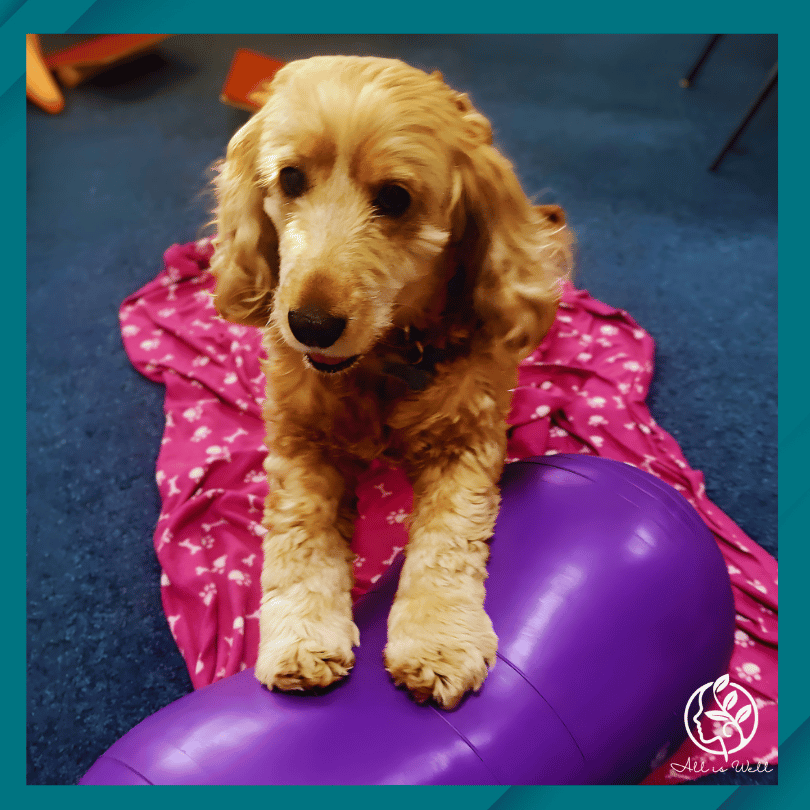
Written from my living room, with a snoozing spaniel draped across my lap after today’s walkies. She’s definitely dreaming of chasing squirrels, based on the speed her little paws are going.
If only my own nervous system regulated itself that efficiently…
If you’ve ever watched a child try to sit still after lunchtime, you’ll know that bodies have opinions. Loud ones. And if you’ve ever tried to sit still after a long week, you’ll know adults aren’t much different.
In the therapy world, and in our school wellbeing sessions with Lola, we talk a lot about proprioception (and its close cousins, vestibular input and sensory circuits). These are the systems and activities that tell us where our bodies are in space and help our nervous systems settle. It’s the quiet background system that keeps us grounded, organised, and vaguely capable of functioning. When it’s working well, life feels manageable. When it’s not…well, that’s when you find yourself staring into the fridge wondering what you came for.
This week in school, Lola (our resident four‑legged practitioner and part‑time squirrel chaser) has been guiding children through activities that help their bodies settle: pushing, stretching, breathing, tiptoeing, wiggling. It looks playful, and it is, but it’s also deeply regulating.
These simple movements help children reconnect with themselves, especially when the world feels a bit too big, too loud, or too fast.
It still amazes me how just 20 or 30 minutes of movement, play and dog assisted activities can shift things for a child, helping them recognise what’s happening in their bodies, name it, and find something that actually helps. Those small moments of regulation ripple out into the rest of their day in school, and often far beyond it. And this is what inclusion really looks like in practice: giving every child access to the tools, support and experiences they need to feel safe, settled and ready to learn.
And here’s the bit we often forget:
Proprioception isn’t a “child thing”. It’s a human thing.
Adults need it just as much. We just disguise it better. We call it things like:
“Going for a walk to clear my head”
“Stretching my back because I’ve been hunched over my laptop like a gremlin”
“Pushing the door open slightly harder than necessary because life is…a lot”
“Doing a dramatic sigh in the kitchen”
These are all proprioceptive strategies, part of the broader sensory toolkit that includes balance, vestibular input, and other whole body based cues. We’re all regulating; we just don’t announce it with a laminated card, coloured paw print dice, and a therapy dog.
One of my favourite things about working in schools is how children remind us of the basics. They don’t pretend they’re fine when they’re not. They don’t apologise for needing movement, pressure, or a moment to breathe. They just…do it. Sometimes much to the frustration of the adults around them.
Our sessions, whether dog assisted, play based, or movement led, give them permission at an appropriate time to listen to their bodies without shame or fuss. To act on it. To discover the solution for them in that moment.
Maybe that’s the lesson for the rest of us.
Your body isn’t misbehaving. It’s communicating.
And sometimes the most grown up thing you can do is listen.
So this weekend, take a leaf out of Lola’s book: Push something (gently). Stretch something (slowly). Breathe (deeply). Wiggle (enthusiastically). Tiptoe (dramatically, if you must).
Give your nervous system a chance to come home.
Because regulation isn’t about perfection. It’s about connection, to yourself, to your body, and to the world around you.
And if a therapy dog can teach us that in a primary school corridor, I think we’re all in good hands…or paws.
If reading this has you thinking, “Actually…our school could do with a bit of this,” feel free to drop us a message. Whether you’re curious about dog assisted sessions, play based support or movement led wellbeing work, we’re always happy to chat about what support could look like for your school or community.
