The Hidden Spaces Supporting Emotional Regulation
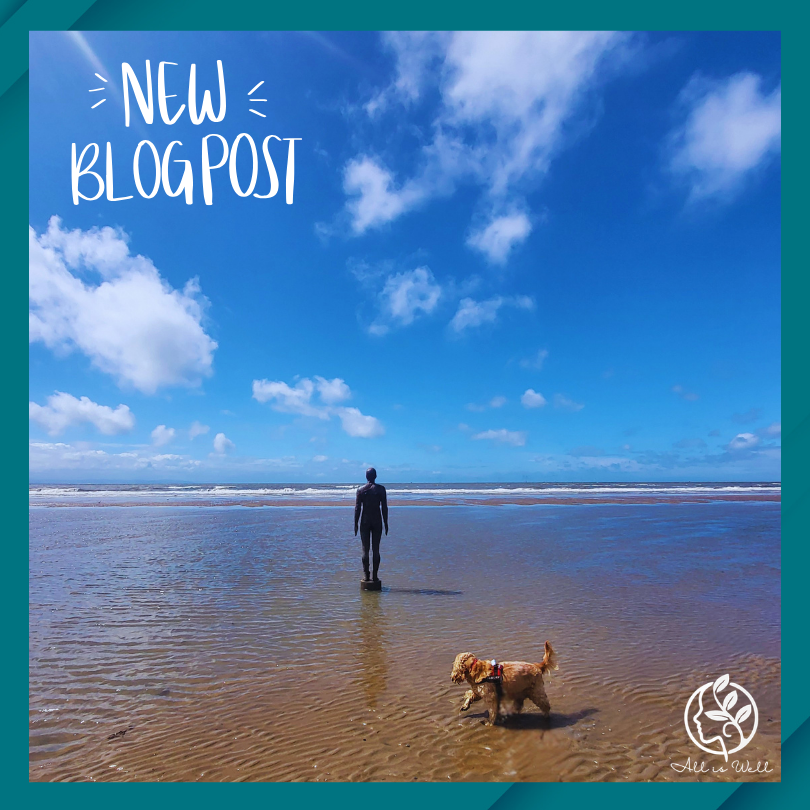
Written from a VERY sunny garden where I am pretending I’m on a Mediterranean retreat, whilst Lola is living her best life rolling in something questionable and refusing to acknowledge recall.
It is one of those days where the sunshine makes everything feel slightly lighter…except, apparently, Lola’s treat demands.
This week has been half term for me and Lola…which in our world doesn’t mean a week of switching off, it means a week of catching up on the quieter, behind the scenes parts of the work. Paperwork, planning, emails, and the all the things that keep everything running but never make it on social media.
For Lola, it has meant something equally important: rest. Proper, intentional, ethical rest. And given the ridiculous heat, she has taken this responsibility very seriously. Her schedule has mostly involved supervising me from the shade, splashing in her doggy paddling pool, launching herself at the hose pipe with the enthusiasm of someone auditioning for a water based action film, sneaking a few cheeky swims in the canal and on the beach, and then collapsing in front of the fan like a small, furry aristocrat.
These quieter weeks matter. They’re part of the work too, the foundations that make the visible moments possible.
There’s also a version of school life most people never really get to see. Not because it’s hidden on purpose, if anything I’d love people to witness half of it, but because it rarely happens in the places we’re trained to look.
We imagine learning as something that takes place at desks, in neat rows, with structured tasks and visible outcomes. Lovely idea and very brochure friendly. But when you work closely with children experiencing trauma, anxiety, or emotional overwhelm, you quickly realise that some of the most important work in schools happens far away from anything that looks like a traditional lesson.
It happens in the quiet, in the inbetween moments, and in the spaces that were never designed to be “learning spaces” at all. (Shoutout to the corridor outside Year 6 that has probably seen more emotional breakthroughs than most therapy rooms this school year!)
Under tables, where safety feels smaller
Sometimes it looks like sitting under a table with a child who cannot tolerate the noise, light, or expectation of the classroom in that moment. Under there, the world feels reduced. Less demanding. Less sharp. There is no pressure to perform or explain. Just presence.
And no, before anyone asks, I wasn’t under the table because I had given up on adulthood. Although on certain days, it is tempting. It is not avoidance. It is regulation, as taught to me by that Year 1 child. A nervous system moving out of overwhelm, slowly finding its way back through co-regulation and safety.
These are the moments that rarely get recorded or reported, mostly because “Spent 30 minutes under a table being a dog weighted blanket” doesn’t fit neatly into a data dashboard or tick box exercise.
In corridors, on edges, and in pauses between demands
It happens in corridors too.
A slow walk alongside a child who cannot yet sit in the classroom but cannot yet fully leave it either. The emotional equivalent of hovering in the doorway at a party you didn’t want to attend. On the edge of playgrounds, where a child watches others play before they feel ready to join. (We’ve all been there. Some of us still are.)
In those pauses where nothing looks “productive” from the outside, but everything is happening internally. This is where emotional regulation in schools is often rebuilt. Not through instruction, but through safety, repetition, and relational consistency. Basically: the opposite of a behaviour chart.
In staff rooms, where adults quietly carry so much
It is NOT just children.
Sometimes the most important work happens in staff rooms, or in short conversations at the end of a long day, where teachers finally allow themselves to admit they are overwhelmed. There is always that moment where someone says “I’m fine” in a tone that suggests they are, in fact, one email away from emotional collapse.
Support for staff wellbeing in schools is not an extra. It is part of what holds everything else together. Like coffee. And biscuits. And the collective agreement to ignore the broken photocopier until Monday.
On the floor, in play, and in shared attention
It also happens in play.
On the floor with Lego. Side by side rather than face to face. No pressure to talk directly. Just shared focus and quiet connection. And yes, standing up afterwards does sometimes involve noises that suggest at least 20 years have been added to my joints overnight. Occupational hazard.
In those moments, trust is built in a way that can feel almost invisible, but is incredibly powerful for children who have experienced instability or loss.
With Lola, where regulation becomes something felt rather than explained
And then there is Lola.
Lola is a therapy dog who works within this same landscape of emotional support and regulation in schools. Her role is not about “fixing” anything. It is about presence, consistency, and connection. With children, she offers steady, non-judgemental companionship. For some, she becomes a weekly anchor, something predictable in a world that may not feel predictable at all.
But it is important to be clear about something at the heart of ethical animal assisted intervention:
Lola’s welfare is always prioritised.
(And she fully supports this message.)
Her work is carefully structured around her needs, her temperament, and her capacity for different environments. She is not required to be “on” all the time. She is not used beyond what is appropriate for her wellbeing. She is given choice, rest, and space. Her recovery time is just as important as her working time. And that recovery looks exactly as you would expect.
Long walks through open fields. Freedom to run, sniff, and explore.
Muddy ponds…all of them, ideally. Even the ones we briefly pretend not to notice.
Water. Joy. Rest. Deep sleep.
And quiet evenings curled up at home, snuggling, resting, and watching the world slow down again.
This balance matters. Her welfare is not an add on to our work. It is the foundation of it. Without it, there is no ethical practice.
Why these hidden moments matter
When you put all of this together, a pattern emerges.
The work that truly supports children’s emotional regulation in schools does not always look structured or formal. It often looks like small moments repeated consistently over time.
Under tables. In corridors. On floors. In staff rooms. On muddy fields or paddling pools with a dog who is both a companion and a carefully cared for, well supported partner in this work.
These are the hidden places where emotional regulation in schools is rebuilt.
Not through systems alone, but through relationships, safety, play, fun, laughter and presence.
And when these moments are held well, they do not stay hidden for long. Their impact slowly shows itself in how children begin to cope, connect, and return to themselves again.
Preferably without so many future under table appearances…but I’m not making any promises, I quite liked it.
If you’d like to learn more about the All Is Well Approach, including our trauma informed school support, our Play Practitioner service, and our animal assisted intervention work with Lola, you can read more across our website. You’ll find information about school partnerships, emotional regulation support, and wellbeing sessions via the link below.
